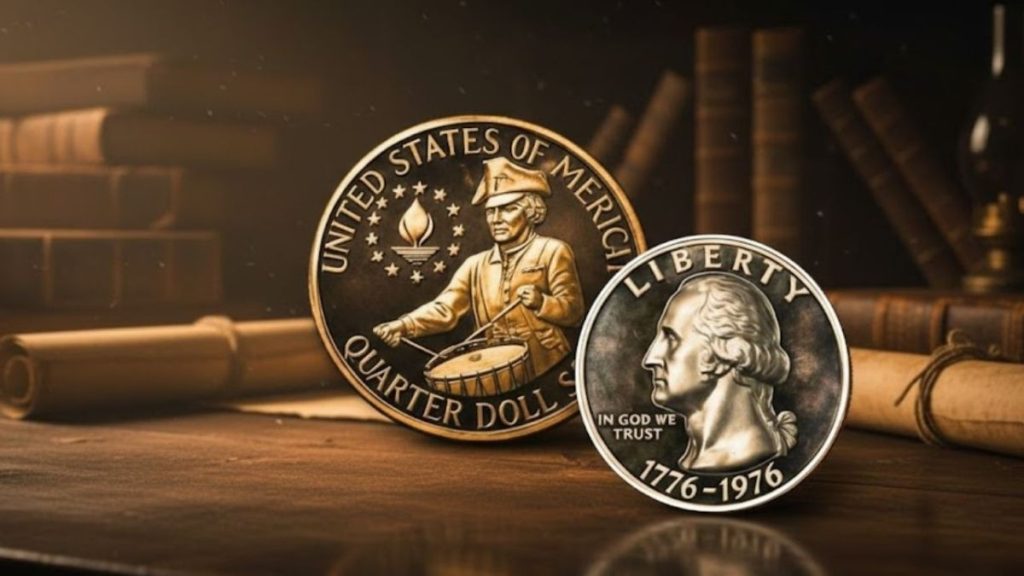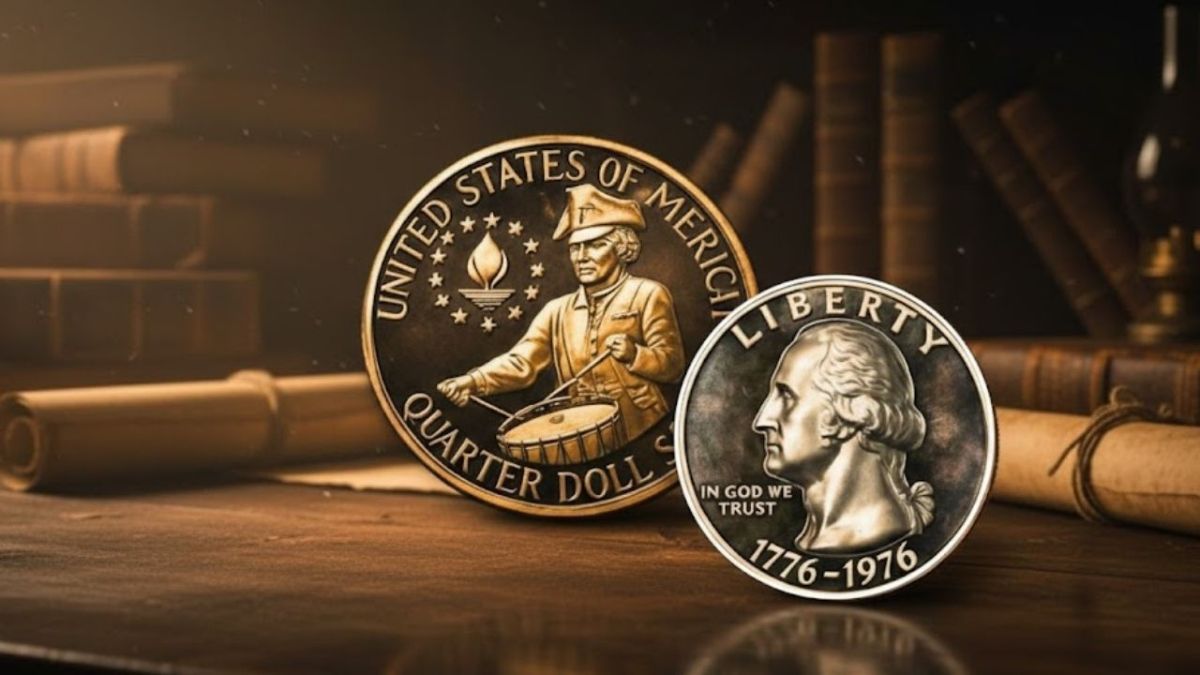
The Bicentennial Quarter was released in 1975 and 1976 to mark America’s 200th year of independence. Unlike standard Washington quarters, this edition featured a distinct reverse design showing a colonial drummer, a flaming torch, and 13 stars representing the original colonies. Designed by Jack L. Ahr, this coin stands out for its historic and artistic significance.
While millions were minted, certain rare varieties and minting errors have dramatically increased the value of some coins, with one famously rumored to be worth as much as $3.2 million.
Understanding the Different Types of Bicentennial Quarters
Various Versions Offer Unique Value
Not all Bicentennial Quarters are alike. The value of each depends heavily on the coin’s composition, minting method, and condition. Here’s a breakdown of key types:

- Standard Issue (Copper-Nickel): Found in general circulation, these are worth face value or slightly more.
- Silver Issue (40% Silver): Minted for collectors, these versions often fetch higher premiums.
- Proof Coins: Made with polished dies, their sharp features and reflective finish appeal to high-end collectors.
- Error Coins: Including double die errors, off-center strikes, and wrong or clipped planchets, these are extremely rare and can fetch hundreds to thousands of dollars.
Value Chart for Bicentennial Quarter Types
Quick Reference Guide to High-Value Coins
| Type / Variety | Key Feature | Typical Value Range |
|---|---|---|
| Standard Issue | Dual date 1776–1976 | Face value to a few dollars |
| Silver Issue | 40% silver content | Several to hundreds of dollars |
| Proof Coins | Mirror-like finish, sharp details | Depends on grade |
| Double Die Errors | Visible doubling in design | $500 to $3,000+ |
| Off-Center Strikes | Misaligned designs | $100 to $1,500+ |
| Wrong Planchet Errors | Struck on wrong metal | $500 to $5,000+ |
| Clipped Planchets | Missing part of the edge | $200 to $1,000+ |
Why Are Some Bicentennial Quarters So Valuable?
The Role of Scarcity and Condition
Most Bicentennial Quarters carry little more than face value, but rare minting mistakes, silver content, and near-perfect condition significantly raise a coin’s worth. Collectors prize these features:
- Mint state condition (MS-65 or higher)
- Silver versions from collector sets
- Proofs in original packaging
- Visible mint errors
The historical significance of the coin also boosts demand, making it a favorite among numismatists.
Silver Bicentennial Quarters: More Than Just Change
Limited Release, High Interest
The silver Bicentennial Quarters, sold as part of collector sets, contain 40% silver. Their distinct weight and edge color make them easy to spot. In pristine condition or certified by a grading agency, these coins can command noteworthy prices.
Latest Stories
 All‑New 2026 Honda Civic Sedan – 50 MPG Hybrid, Fresh Design, and Big Value for Buyers
Rare Minting Errors That Make Headlines
Error Coins Add Excitement to Collecting
Coins with production mistakes often generate the most buzz—and money. Common valuable errors include:
- Double Die Errors – Letters or images appear doubled due to die misalignment.
- Off-Center Strikes – Design is visibly misaligned.
- Wrong Planchet – Coin struck on a dime or foreign coin blank.
- Clipped Planchets – A portion of the coin’s edge is missing.
The rarity and visual appeal of these errors can lead to auction prices reaching thousands.
Proof Bicentennial Quarters: A Collector’s Dream
Striking Beauty with Premium Value
Proof coins are crafted with care, using polished dies and planchets. These are not meant for circulation but for collectors. Their sharp edges, reflective surfaces, and flawless detail make them highly desirable.
Latest Stories
 2026 Toyota RAV4 Goes All‑Hybrid – New Power, 50‑Mile EV Range and Bold Trims Redefine America’s Favorite SUV
They were minted in both copper-nickel and silver, with values depending on condition and whether they remain sealed in original government packaging.
Grading Matters: The Importance of Condition
How Coin Grades Affect Value
Coins are graded from Poor (P-1) to Perfect Mint State (MS-70). Bicentennial Quarters in uncirculated or mint state command far more than worn, circulated versions.
Getting a coin professionally graded by services like PCGS or NGC boosts its legitimacy and potential value, especially for sale or auction.
Latest Stories
 2026 Dacia Duster Breaks Cover — Rugged Redesign, Hybrid Power and Safety Tech for a Budget Price
Why the Bicentennial Quarter Still Attracts Collectors
Heritage, Design, and Market Value
The Bicentennial Quarter remains popular not just for its look but for its symbolism of American freedom. Even today, rare varieties and mint errors continue to fetch impressive sums in collector markets. With interest in numismatics growing, especially online, the long-term value potential remains strong.
Real Stories of Valuable Coin Finds
Pocket Change Surprises and Hidden Heirlooms
There are real-life reports of people finding valuable Bicentennial Quarters in loose change, coin jars, or inherited coin collections. One such rumored coin—an error quarter with pristine condition—was valued at up to $3.2 million. While these finds are rare, they’re not impossible, and that chance alone keeps the hobby thrilling.
How to Spot a Valuable Bicentennial Quarter
Key Features to Watch For
If you’re curious whether your quarter is worth more than 25 cents, here’s what to check:
Latest Stories
 2026 Toyota RAV4 Redefines SUV Standards with Bold Design, 44 MPG Efficiency and Trail-Ready Trims
- Look for the dual date “1776–1976”
- Check the edge for silver coloring (indicates 40% silver)
- Spot mint marks:
- “D” for Denver
- “S” for San Francisco (often silver or proof)
- Use a magnifying glass to spot doubling or off-centering
- Consult coin reference books or professional grading services
What’s Next for Bicentennial Quarters?
The Long-Term Outlook
As time passes, circulated examples will become scarcer, especially those in better condition. This could drive values even higher. Rare error coins and high-grade examples will likely become more desirable as they’re preserved or discovered in collections.
Whether you’re a collector or just curious, it’s worth examining your quarters. One small detail could mean a major payday.
Latest Stories
 2026 Mitsubishi L200 Roars into U.S. Market, Diesel Beast Targets Off-Roaders and Contractors